Call&Response: A Response
Clipped from: https://domamisconduct.substack.com/p/call-and-response-a-response
By Whistleblower
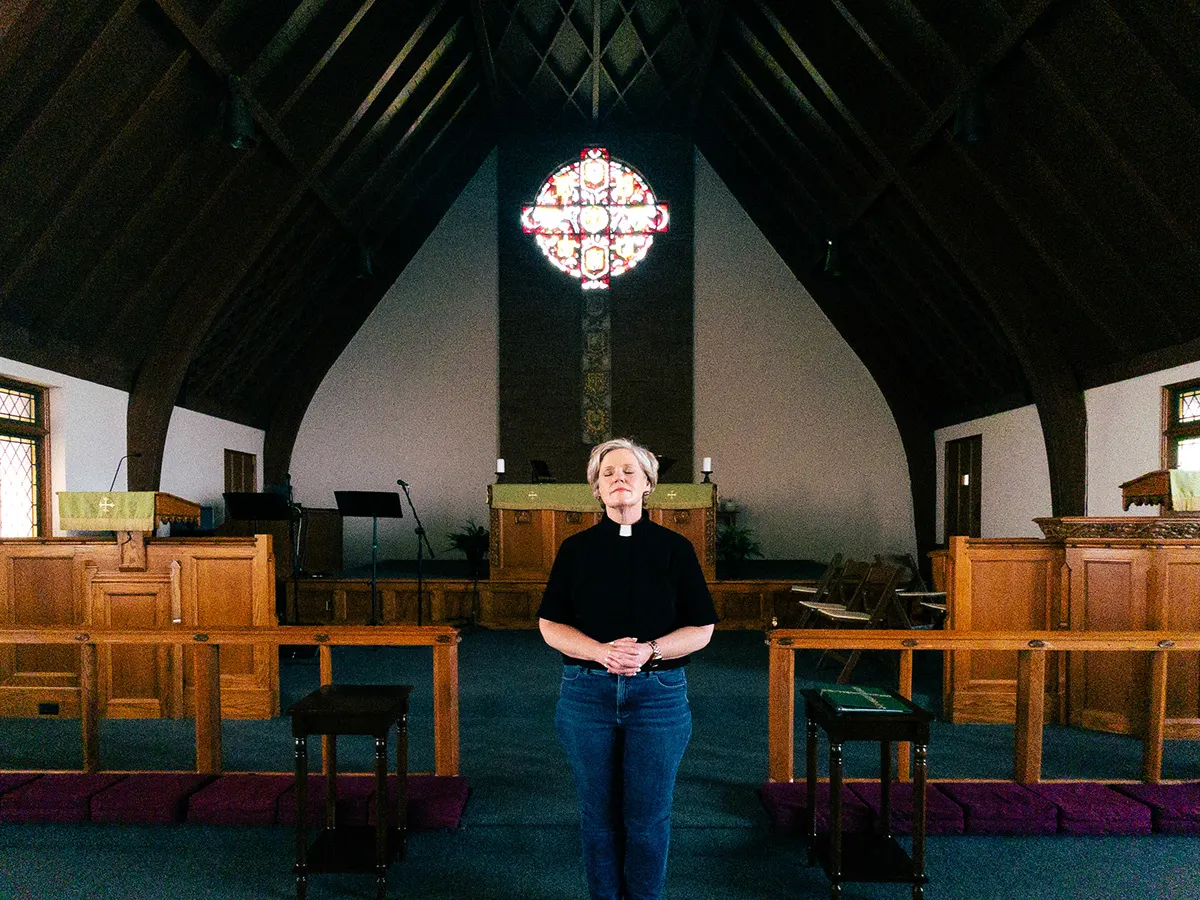
Photo credit: Juliet San Nicolas de Bradley | Call&Response
The Reverend Juliet San Nicholas de Bradley, who is a deacon in the Diocese of Churches for the Sake of Others (C4SO), has published a series of profiles on female clergy in the ACNA. She has titled it “Call&Response”.
It was shared to X by the Reverend Virginia Musselman, another deacon from the Diocese of the Carolinas, who leads the ACNA’s provincial Women’s Leadership Network. Musselman wrote: “As a dual integrity Province, some dioceses ordain women and some do not, this project tells stories of women from dioceses that do ordain women.”
Virginia M Musselman @penguin_gia
A beautiful project by my friend Juliet San Nicholas de Bradley of women’s stories being called in the ACNA. As a dual integrity Province, some dioceses ordain women and some do not, this project tells stories of women from dioceses that do ordain women.
ourcallandresponse.com
9:19 AM · Sep 3, 2026 · 93 Views
Musselman’s organization has become somewhat notorious for controversy. In February, the Women’s Leadership Network organized a seminar intended to platform a book describing complementarian theology as a form of sexist predation. The seminar ended up being cancelled thanks to action by the ACNA’s Dean, the Right Reverend Julian Dobbs. Anne Kennedy and my friend Mark Marshall offered some excellent write-ups of the situation at the time. I highly recommend subscribing to their Substack pages if you haven’t already.
Mark Marshall:
Where to begin with Andrew Bauman’s latest Safe Church: How to Guard Against Sexism and Abuse in Christian Communities? Well, chapter 1 begins with a quote from Rachael Held Evans that muses, “Imagine if every church became a place where we told one another the truth…
Getting back to the profiles at “Call&Response”, the photography is really professionally executed, so hats off to the photographer. The interviews, on the other hand, are somewhat… inflammatory. Some of the featured clergy characterize opposition to women’s ordination in the “dual integrity Province” as evil and demonic.
There’s the Reverend Heather Ghormley of the Anglican Diocese of the Great Lakes, who suggests that people who don’t attend parishes with female clergy have a “control” problem:
“People who need to be in control don’t often go to churches with women pastors. There’s something less powerful and controlling about it. So, in some ways, I feel like I’ve had a very easy road because being a multiethnic church with a woman pastor has weeded out a lot of people.” (The Reverend Heather Ghormley, Anglican Diocese of the Great Lakes)
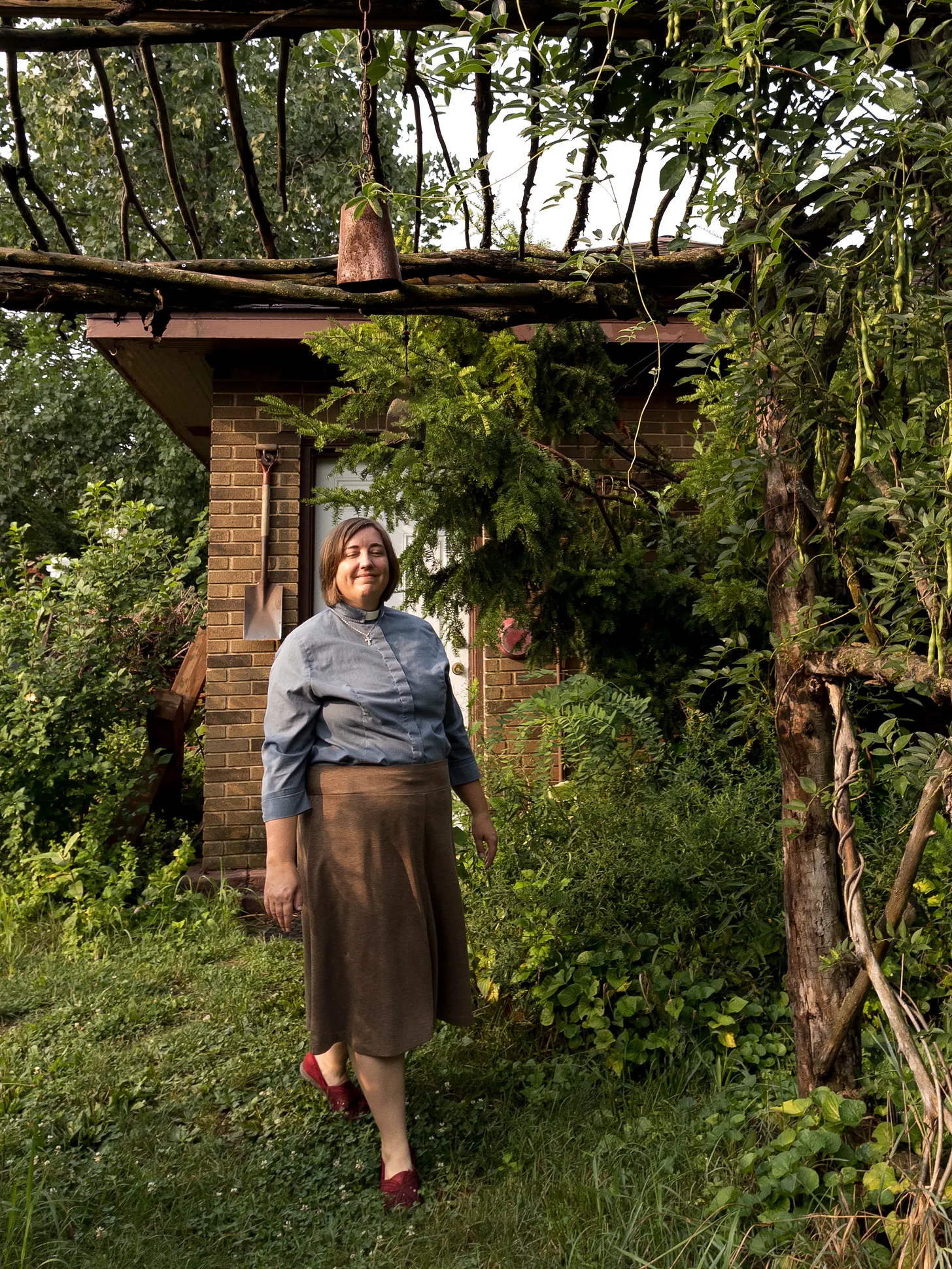
The Reverend Heather Ghormley of the Anglican Diocese of the Great Lakes (Photo credit: Juliet San Nicolas de Bradley | Call&Response )
The Reverend April Murrie of the Diocese of the Mid-Atlantic (DOMA), is a little more blunt, directly characterizing opposition to female ordination as satanic in origin:
“I know that they’re spiritual attacks. I think I underestimated how much Satan hates women in ministry and how he will go after us tooth and nail.” (The Reverend April Murrie, DOMA)
Murrie goes on to acknowledge that the intended effect of “dual integrities” is establishing “plausibility structures” to properly inculcate little girls and boys into the gospel of women’s ordination:
“And so I joke with other women clergy that we are disruptive, but we’re plausibility structures. … And you know, I didn’t have any plausibility structures of women clergies and and now I have three year olds at my church, both boys and girls, pretending to serve the Eucharist and saying they’re like Pastor April.” (The Reverend April Murrie, DOMA)
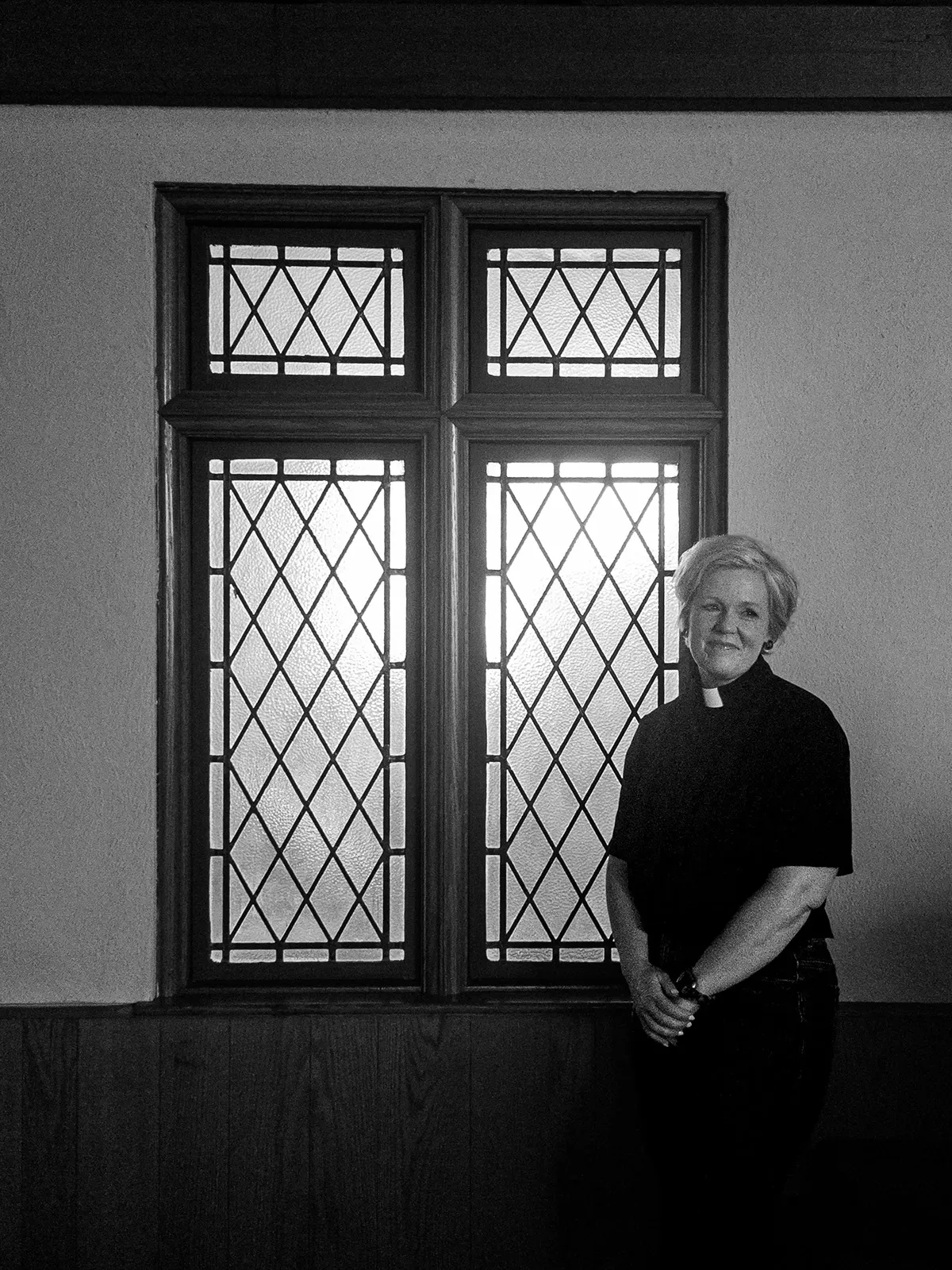
The Reverend April Murrie of the Diocese of the Mid-Atlantic (Photo credit: Juliet San Nicolas de Bradley | Call&Response )
The Reverend Jess Bennett of the Anglican Diocese of Pittsburgh professes to know the mind of the complementarian. She has a little voice in her head, which she calls “internalized misogyny”, reminding her about Scripture. It can’t be the Holy Spirit, of course, since we all know God only ever speaks in personal prophetic words to endorse women’s ordination:
“I have this teeny little complementarian deep in my heart that every once in a while says, “Hey, did you forget about this scripture? Or - are you sure you're not just doing this to glorify yourself?” You know, and I have to tamp it down. And so I think there is still just being raised in such a context like that. That's a funny, cute way to put it, but definitely internalized misogyny from what I believed about what it means to be a woman my whole life or for, you know, much of my upbringing and that I'm continuing to kind of unpack those moments when I realized that - internalized misogyny is probably the right way to phrase it - whether it's about me or about other women or just about, you know, the comfort of having a command and leadership, those sorts of things I just am realizing are so deeply embedded in me that the Lord is continuing to expose and graciously invite me to work through.” (The Reverend Jess Bennett, Anglican Diocese of Pittsburgh)
According to Bennett, complementarians who don’t appoint women to leadership not only cause the church to err but are actually harming women. Should ACNA dioceses that don’t permit women to be appointed as rectors be charged with sexist abuse?
“I came to a position where I thought, oh, hey, I think women need to be at the table and in church leadership in some way. But I didn't think that was supposed to be me. I didn't know if some women should be lead pastors or if they should just at least be on elder boards and you know, those sorts of things. I very much realize that I was experiencing in my personal life and growing in my theological maturity, realizing this is a place where the church is in error and people are getting hurt because of it.” (The Reverend Jess Bennett, Anglican Diocese of Pittsburgh)
When Bennett selects a version of the Bible for her congregation, her chief focus is on selecting a translation that features gender-inclusive language:
“I think the other struggle, which I mentioned before, of this not having the mentorship or the theological lens and pastoral ministry kind of training that I have felt behind in compared to my male counterparts who have sort of seen themselves in this lens, whether it’s pastoral books that have all male pronouns or choosing to read from scripture, we use the NRSV on Sundays pastorally because it translates when Paul writes brothers, how he means brothers and sisters, he means everyone. And so the translations say brothers and sisters.” (The Reverend Jess Bennett, Anglican Diocese of Pittsburgh)
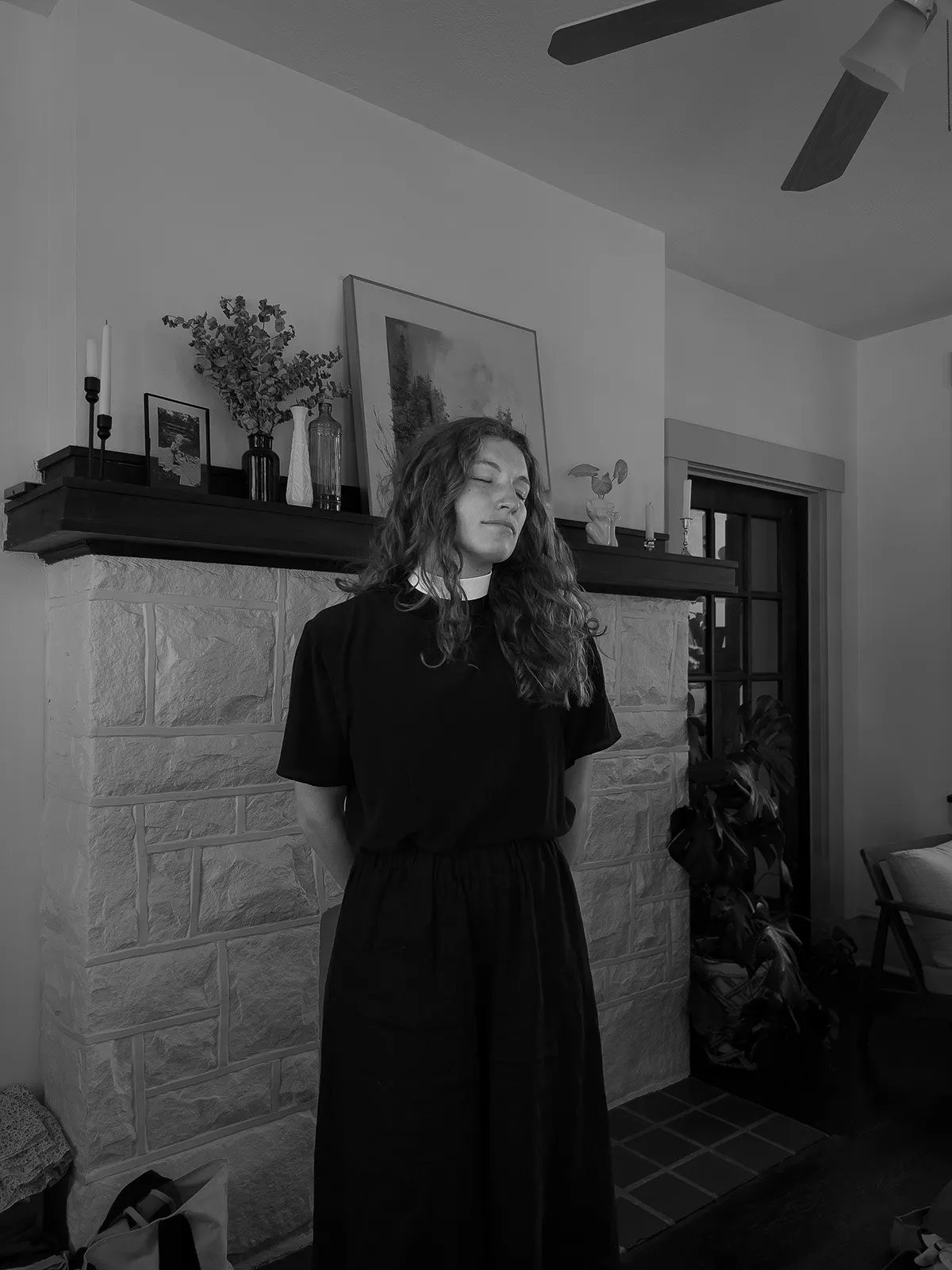
The Reverend Jess Bennett of the Anglican Diocese of Pittsburgh (Photo credit: Juliet San Nicolas de Bradley | Call&Response )
The Reverend Amanda Holm Rosengren of C4SO, who leads an obscure group calling themselves “Anglicans for Truth, Renewal and Accountability”, appears to characterize systems (dioceses?) where women aren’t “in leadership at every level” as inherently unhealthy:
“I am more and more convinced that to have a healthy system, you need both men and women in leadership at every level. Otherwise, I don't think it's what the Lord intended, so it's not gonna be as good.” (The Reverend Amanda Holm Rosengren, C4SO)
Rosengren ’s nightmare? Her ideology being challenged by Holy Scripture:
“I had a dream one time that I was visiting a church, and I got up to preach in this church. Before I could preach, someone stood up and said, “What about 1st Timothy?” That happens even in my dreams. So I have to be secure. I have to know the Lord has called me and to trust what my worth is in. All pastors need to return to that.” (The Reverend Amanda Holm Rosengren, C4SO)
Rosengren counsels female clergy to mentally bisect the church into factions. You’re either with her, or you’re against her:
“I think the second thing I'd say is to find your people. Because not everyone's going to be your people. You need the folks who get it, who you don't have to explain things to. We all need lay people who are in our corner, and we need fellow clergy who root for us. I'm grateful for a group that I am connected with thanks to the diocese, you the formation cohorts, at least in part of my formation cohort. There are men in that group, as well as another woman, who are like champions of women in ministry. Like, that does happen, even as we need, we need the women folk we can talk to. We also need some of those guys, and they're out there, who can cheer us on just as much. Find the people who you can vent to and who will be angry on your behalf when necessary.” (The Reverend Amanda Holm Rosengren, C4SO)
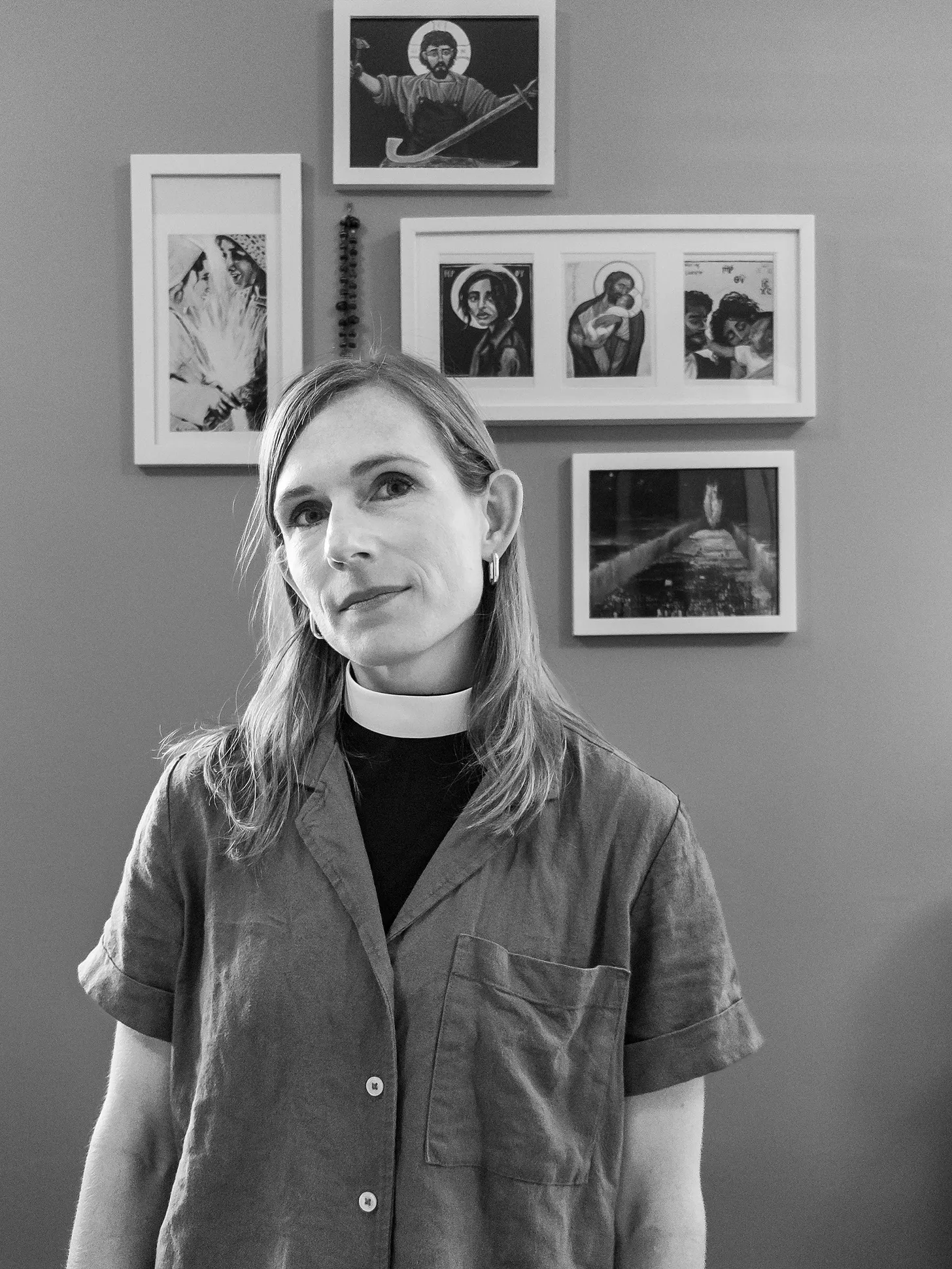
The Reverend Amanda Holm Rosengren of C4SO leads “Anglicans for Truth, Renewal and Accountability”. (Photo credit: Juliet San Nicolas de Bradley | Call&Response )
The Reverend Anna Spray is in a “more evangelical and orthodox diocese”, the Anglican Diocese of Canada, so she styles herself as the “loyal opposition”. There’s a decent chance her bishop, the Right Reverend Dan Gifford, is racist and sexist because she hasn’t been appointed as a canon yet:
“I’m grateful now because however annoying and persistent I am, I think my bishop understands that I do it for the good. I’m doing it for the betterment of our fellowship together. I think he’s slowly coming to that. But I also know that if I had been a man, if I had been a white man, I’d be a canon by now.” (The Reverend Anna Spray, Anglican Diocese of Canada)
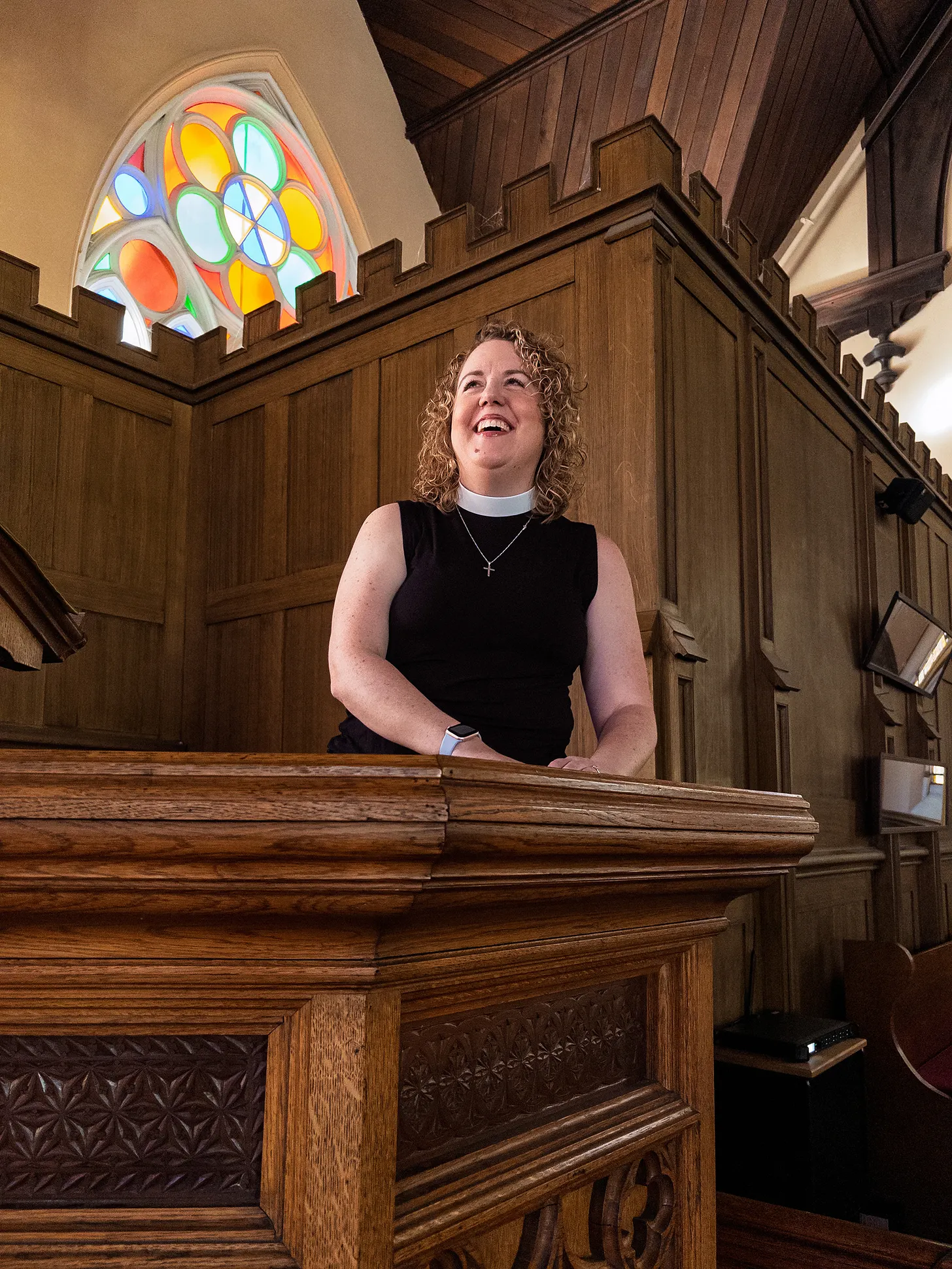
The Reverend Anna Spray of the Anglican Diocese of Canada (Photo credit: Juliet San Nicolas de Bradley | Call&Response )
The Reverend Canon Tracey Russell of the Anglican Diocese of Pittsburgh became convinced she was called to the priesthood after having a dream in which she was ordained. If a woman receives such indication of a calling and her community gives her the green light, nothing should stop her from getting ordained:
“If you are called to be ordained, if the Lord has made it clear to you, if your community has discerned with you that you are being called to ordination, nothing should stop you.” (The Reverend Canon Tracey Russell, Anglican Diocese of Pittsburgh)
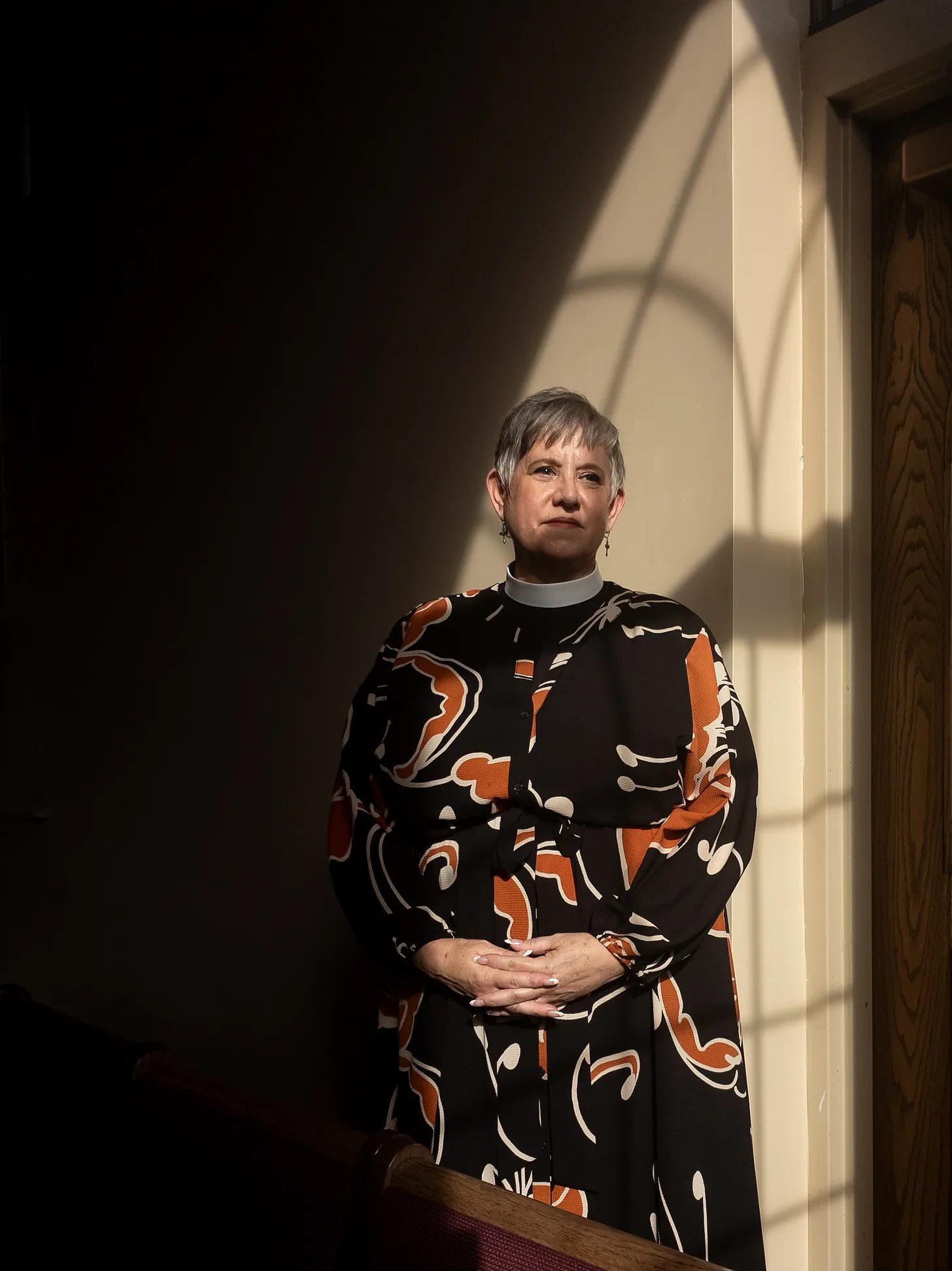
The Reverend Canon Tracey Russell of the Anglican Diocese of Pittsburgh (Photo credit: Juliet San Nicolas de Bradley | Call&Response )
I mean, the Holy Spirit has already gone on record, making it known to the Reverend Virginia Musselman, leader of the provincial Women’s Leadership Network, that He (God) completely supports women’s ordination:
“And so when my rector came to me and said, hey, like I think God might have a calling on your life to become a deacon, I was just really surprised because I had never considered that ever. Even though these were natural parts of who God had made me to be, I didn’t see that in myself. And I initially wanted to say, no, no, no, that’s not for me. But this voice inside the Holy Spirit was like, just say yes to him. Say yes, you’ll pray about it. And I was like, okay, rector, pastor. Okay, I’ll pray about [sic] And so I did, and when I prayed, I just got this green light from God.” (The Reverend Virginia Musselman, Diocese of the Carolinas)
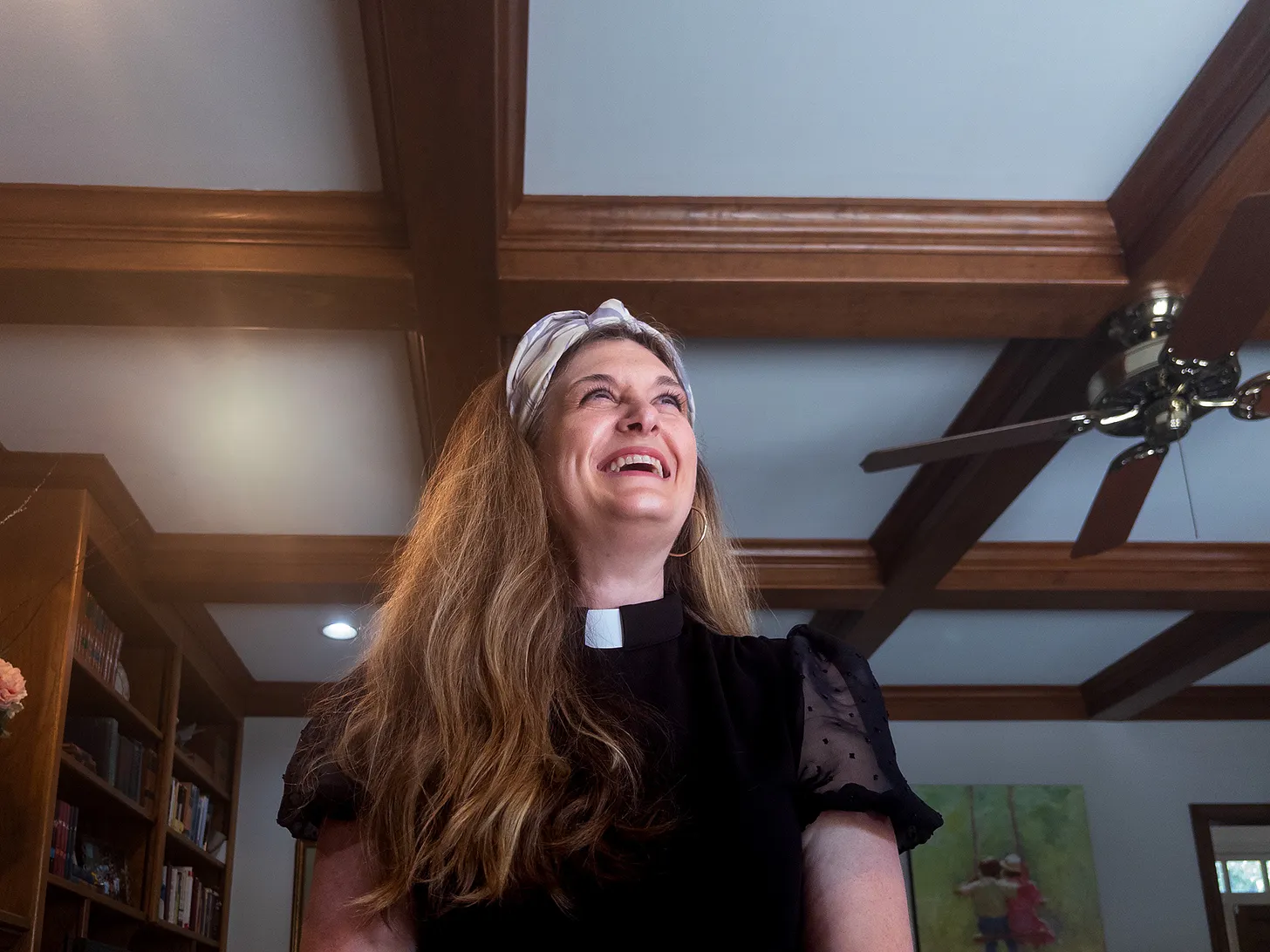
The Reverend Virginia Musselman leads the provincial Women’s Leadership Network. (Photo credit: Juliet San Nicolas de Bradley | Call&Response )
The Reverend Erin Moniz is the head of the College of Deacons in C4SO. As a child, she became frustrated at the idea that God might not want her to pursue ordination. This prompted her to wonder whether God is sexist.
“And it also kind of put me on a track with God where, especially during college, I really kind of got into this back and forth, kind of this antagonism with God that actually started earlier in high school and really bled into college, what I often refer to as my angry phase. And I was asking a question then that I didn’t know I was asking until later, but that question essentially was, is God sexist? And does God believe that I am a second class citizen in the kingdom.” (The Reverend Erin Moniz, C4SO)
Moniz admits she wouldn’t have chosen to follow God if He (God) deemed her a “second class citizen” by refusing to support her ordination. Priorities! Thankfully, she learned how to reject the parts of Scripture commonly cited in opposition to her ideology:
“I really needed to know because I knew that I was, depending on what the answer was, would depend on whether or not I could stay a Christian. So I just didn't know if I could follow a God that thought I was a second class citizen, but I couldn't love a God that thought I was a second class citizen. so that ended up being a really valuable journey for me as I came to really push in deeper with the Lord in ways that brought me a lot closer to him and in many ways came to terms with a lot of these like clobber passages and verses and things that have been used to weaponize against women.” (The Reverend Erin Moniz, C4SO)
Moniz contends that if a women can be called to the diaconate, she can be called to the priesthood, and “if a woman can become a priest, she can become a bishop”:
“But theologically speaking, I am convinced that if women can be called to the diaconate, they can be called to the priesthood because these are two equal, shared, but like different expressions of the work of the gospel. And if a woman can become a priest, she can become a bishop because that is really just a person of authority who takes their priestly role to encompass a larger area. so theologically and in systems, there really isn’t a barrier that I feel any conviction to.” (The Reverend Erin Moniz, C4SO)
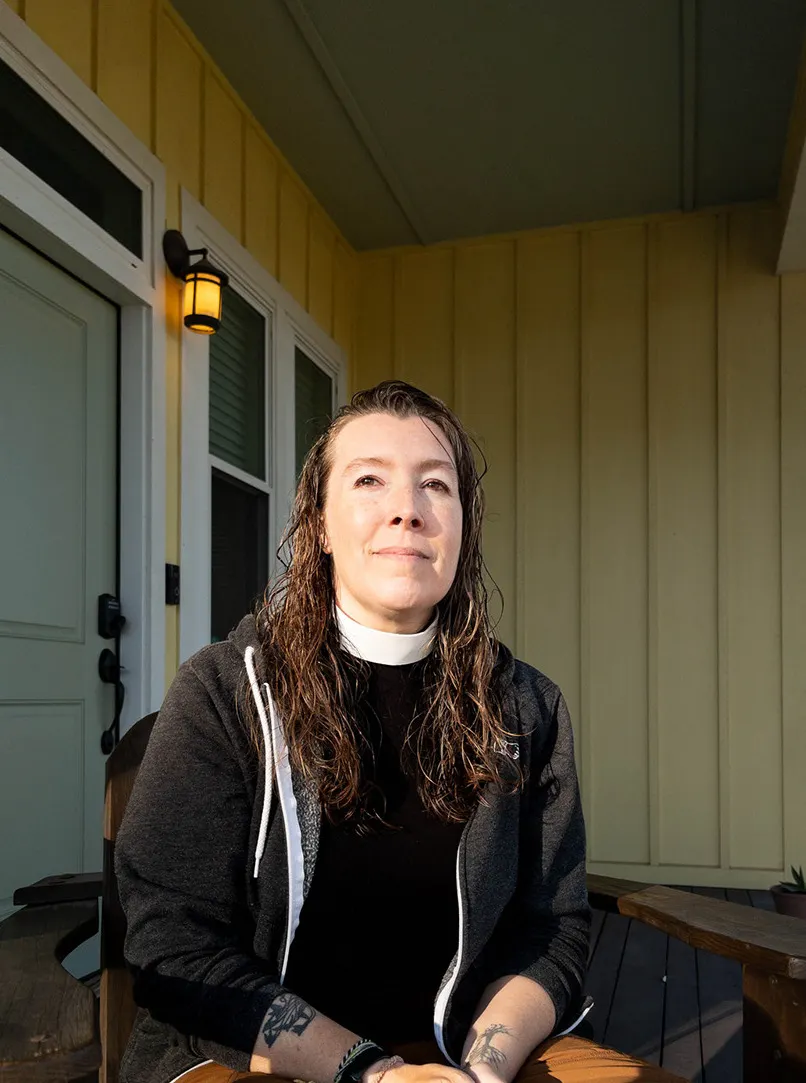
The Reverend Erin Moniz is the head of the College of Deacons in C4SO. (Photo credit: Juliet San Nicolas de Bradley | Call&Response )
The interviewer, the Reverend Juliet San Nicholas de Bradley of C4SO, suggests that her primary reason for seeking ordination was ideological—a means of empowering “women of color”:
“When I was in my discernment process, my big “aha moment” for the priesthood was whenever I told people that I had never seen a woman of color in a place of leadership in a church, and that I was wondering if maybe I was called to that. As soon as I said that, there would be this big light that would come in their eyes and they would say, “yes, you are called to this.” It’s not necessarily about you as Vanya or me as Juliet. There are not many of us right now. I was doing it specifically for young women of color. I think about what it would have been like for young Juliet to see a woman of color in a position of leadership at the church.” (The Reverend Juliet San Nicholas de Bradley, C4SO)
In another interview, San Nicholas de Bradley characterizes the ordination of women in the ACNA as a “space of liberation”:
“Going from a space where women had no power, right? [They] had no place truly in the church, right? - other than to be under men - to this space of liberation to hear the Holy Spirit call you and to have the community continue to affirm that call along the way. I love that.” (The Reverend Juliet San Nicholas de Bradley, C4SO)
If you’re expecting my response to all this, I must apologize for misleading you with the title. For my response, I’m actually going quote one of the interviewees. The contrast between her account and the others was jarring. For the Reverend Trish Nelson, who is Canon for Ordinations in C4SO, her agenda isn’t clobbering people over the head with lengthy lectures about how she’s an empowered female clergywoman. She says her agenda is Jesus:
“People often ask me what it’s been like to serve as a woman in ministry. The truth is some of my greatest barriers weren’t external—they were internal. I grew up in a generation of women who were taught to fight for a place in the world, pound the glass ceiling, and get loud. While I care deeply about women in leadership, my agenda has never been about gender as many would have like it to be. My agenda has always been Jesus.” (The Reverend Trish Nelson, C4SO)
Where have all the women like Nelson gone? Is there a generational divide at work here? Even if one doesn’t theologically support her ordination, one can at least appreciate her simple, good intentions. Where are the women in the ACNA whose agenda isn’t female empowerment? Where are the women in the ACNA whose agenda is Jesus?
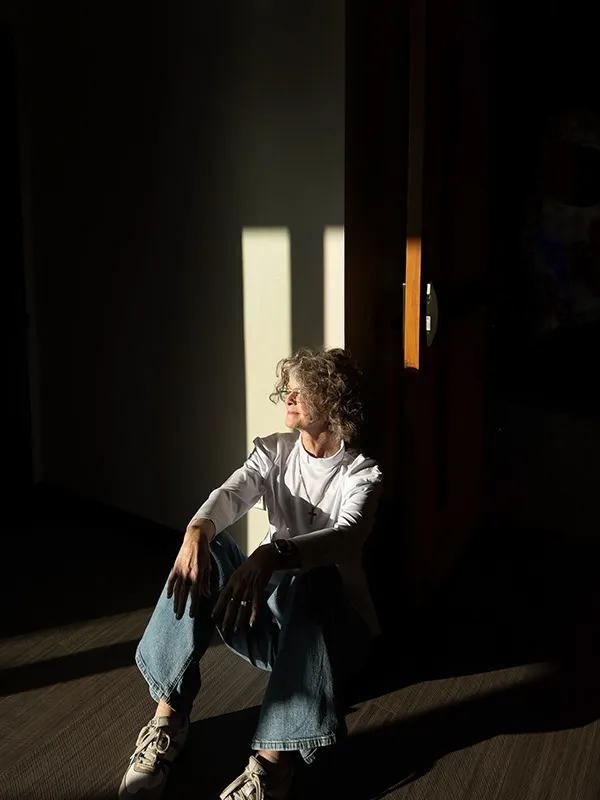
The Reverend Trish Nelson is Canon for Ordinations in C4SO. (Photo credit: Juliet San Nicolas de Bradley | Call&Response )